
Saints of January: Gregory of Nazianzus, Gildas the Wise, & Angela Merici
The Christian calendar invites us to remember saints not as distant heroes, but as people who lived faithfully in complex, uncertain times. The saints we remember in January offer three very different pictures of what commitment to God can look like: deep theological reflection, prophetic critique, and quiet, everyday service.
Together, their lives remind us that faithfulness takes many forms—and often unfolds slowly, imperfectly, and within the ordinary realities of the world.
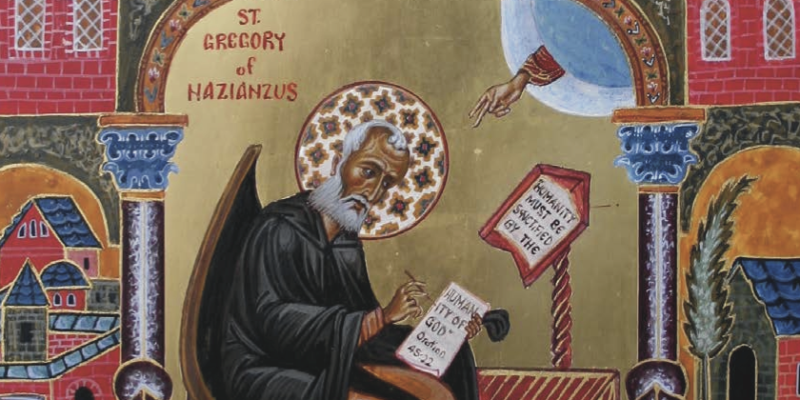
Gregory of Nazianzus
(January 2nd)
Gregory lived from 329-390 and was Archbishop to Constantinople from 380-381. He is remembered specifically for his influence on shaping the theology around the Trinity for both Greek and Latin theologians and is known as the “Trinitarian Theologian.” Along with Basil of Caesara and Gregory of Nyssa, he is famous for being one of the Cappadocian Fathers. These three were known for how they shaped early Christianity and monasticism. Gregory is considered a saint in the Eastern and Western Christian traditions and one of the Great Fathers.
He started following Jesus when on a ship to Athens, they entered a serious storm. Fearing his life, Gregory prayed that if God would save him, he would spend his life in service to God. He survived, went on to Athens where he became friends with Basil of Caesarea (who was an influential theologian himself, a supporter of the Nicene creed, and a saint who shares this saint day with Gregory!). Gregory also became friends with future Roman emperor Julian.
Gregory is known for his effort to combat Arianism—a doctrine that rejects the idea of the Trinity—and for teaching the idea of theosis—or deification. Theosis is the transformative practice of becoming like God and in perfect union with God.
His legacy is the theology he developed around the Holy Spirit and the nature of the Holy Spirit. He coined the idea of the Holy Spirit proceeding Jesus writing, “The Holy Spirit is truly Spirit, coming forth from the Father indeed but not after the manner of the Son, for it not by generation but by procession, since I must coin a word for the sake of clearness.” This idea went to shape much of the future theology around the Spirit.
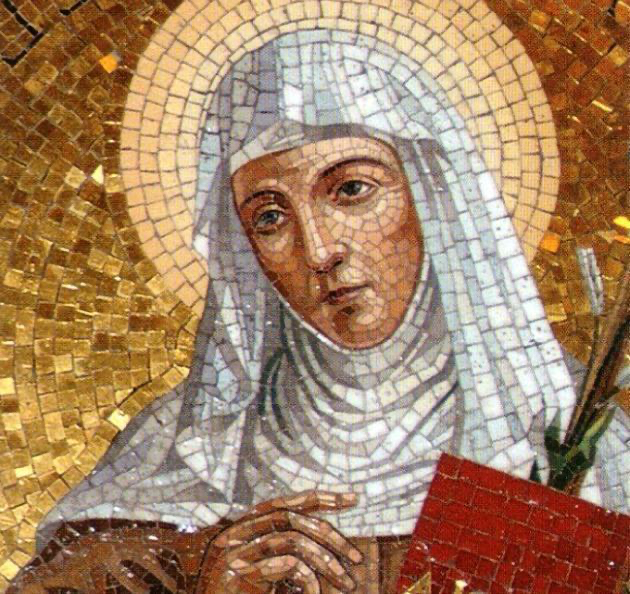
St Angela Merici
(January 27th)
Angela Merici was born March 21, 1474 in northern Italy and orphaned as a teenager. She joined the Third Order of St. Francis and experienced a vision where she felt compelled to found a “company” of women. She went on to do this at age 60, with 12 other women, founding the Company of St. Ursala. It was the first “secular” institution— in that the women lived in the world and not in a monastery, but were committed to Christ in their lives and actions. She lived her life in service to women and girls in need—educating them, caring for them, and counseling them. Long before she officially formed her order, she had taken girls into her home, teaching them in matters of faith and the world, knowing that without any kind of real education many of these girls had no reliable future in front of them.
The official formation of the Company of St. Ursala made a way for many women to do what Angela had felt called to do and did do informally for much of her life. She made a way for others to serve God that went beyond the only two options at the time—marriage or entering a cloistered convent. Her example showed a commitment to God in the context of the world she lived in.
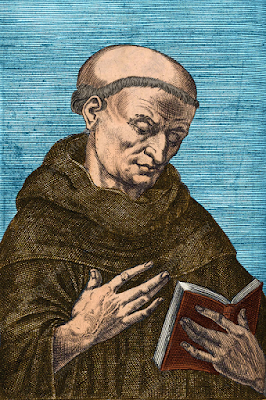
Saint Gildas the Wise
(January 29)
It’s believed Saint Gildas was born around 517 in Wales or Northern England. He lived during the decline of Roman Empire, particularly in Britain where a once permanent military presence had been replaced.
He is most famous for his outspoken critique of the leaders of Britain. He wrote two works that talked about this specifically: The Destruction of Britian and the Epistle. The Destruction of Britain as written as a moral tale from pre-Roman times where Gildas points out the failures of Britains leadership that led to the destruction of Britian. The Epistle includes sermons addressing the sins of the clergy and rulers at the time. His critique helped create the basis for an increase in monastic tradition and participation less than a century later, as the Roman Empire continued to decline.
Gildas lived for many years as a hermit on an island in the Bristol Channel and eventually retired to Rhuys in Brittany where he started a monastery. He died there around 571.
Gildas is considered one of the most impactful figures of the early English church, influencing the Celtic Church in particular.
These three saints lived in vastly different centuries and circumstances, yet they share a common thread: each responded to God’s call in the context of the world they were given.
Their stories invite us to consider how faithfulness might take shape in our own lives—not through perfection or certainty, but through attentiveness, courage, and a willingness to serve where we are.
